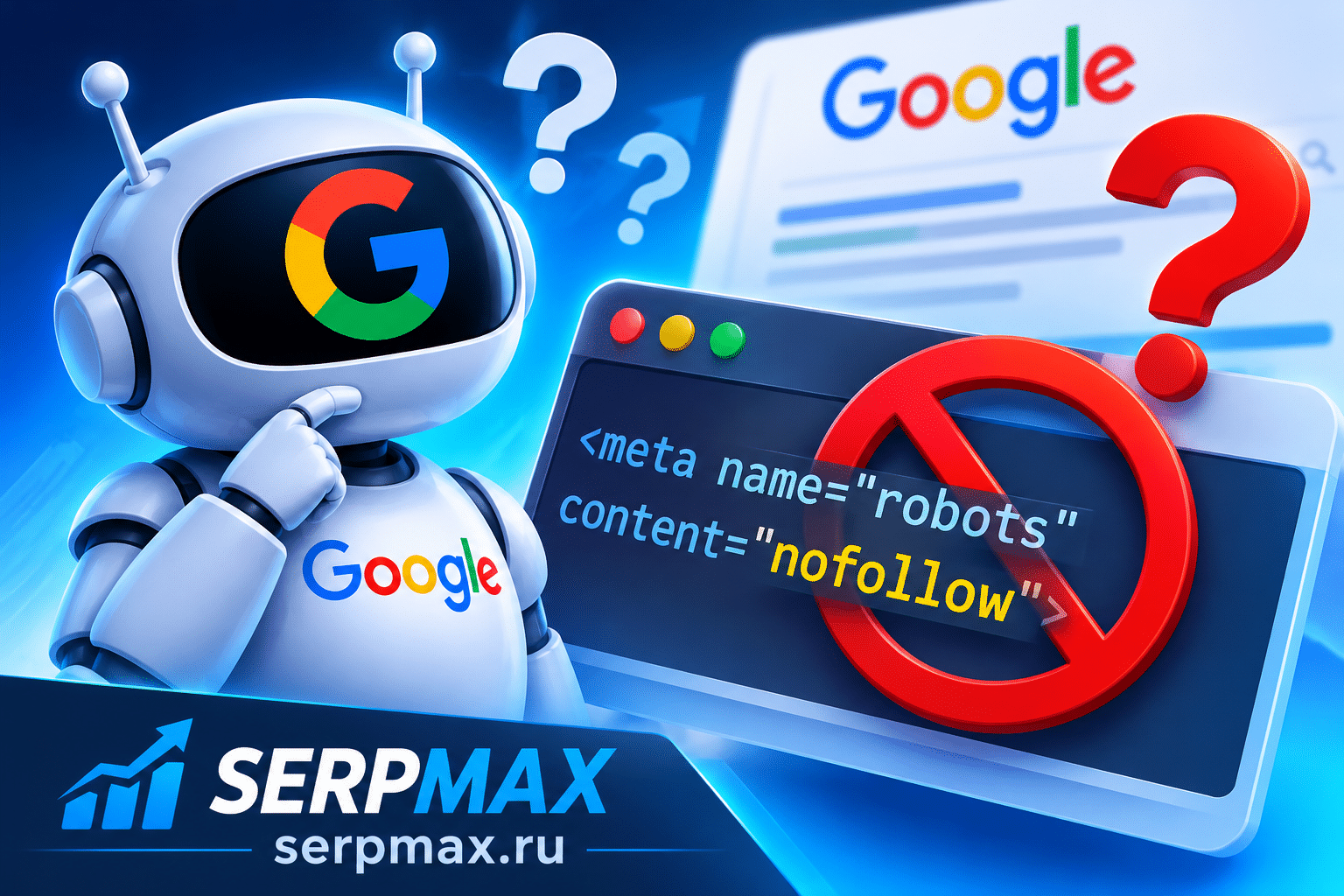
You added meta name="robots" content="nofollow" to a page, expecting Google to stop following links. But Google still discovers and follows them. This is not a bug: Google changed how it treats nofollow. Understanding this change is essential for controlling link equity and crawling. This guide explains why Google ignores meta nofollow and what to do instead.
What meta nofollow does
Meta nofollow is a page-level directive that tells search engines not to follow links on the page. It is set in the HTML head:
<meta name="robots" content="nofollow">
Historically, nofollow was a strong signal: Google did not follow the link and did not pass link equity. But that changed.
Today, nofollow is a hint. Google may still follow the link and may still use it for discovery, even if it does not pass equity in the traditional sense.
Why Google changed its treatment of nofollow
In 2019, Google announced that nofollow would be treated as a hint rather than a directive. This applies to rel="nofollow", meta nofollow and X-Robots-Tag nofollow.
Why the change:
— to improve discovery of important pages;
— to reduce misuse of nofollow for PageRank sculpting;
— to align with how links work on the web.
The result: nofollow still signals that you do not endorse the link, but Google may still follow it for crawling and discovery.
Reason 1: nofollow is a hint, not a directive
The most important reason. Google treats nofollow as a hint. It may follow the link, especially if the link is important for discovery.
What to check:
— is nofollow set via meta, rel or header;
— are links still discovered;
— are pages still indexed.
The fix: if you need to block indexing, use noindex. If you need to block crawling, use robots.txt. Nofollow alone is not enough.
Use meta tags checker to see which directives are set.
Reason 2: nofollow does not prevent indexing
Nofollow prevents equity from passing in the traditional sense, but it does not prevent indexing. If a page is linked from elsewhere, it can still be indexed.
What to check:
— is the page linked from other pages;
— is it in the sitemap;
— is it indexed.
The fix: if the page should not be indexed, use noindex. Nofollow alone does not remove it from the index.
Reason 3: nofollow does not block crawling
Nofollow does not prevent Googlebot from crawling the link. If you need to block crawling, use robots.txt.
What to check:
— are links still crawled;
— is robots.txt used for blocking;
— is the page accessible.
The fix: use robots.txt for crawling blocks. Use noindex for indexing blocks. Use nofollow only for equity signals.
Reason 4: nofollow is ignored for internal links
Google has stated that nofollow on internal links is not effective for controlling equity. Internal links are important for discovery and structure.
What to check:
— are internal links nofollowed;
— are important pages affected;
— is internal linking consistent.
The fix: remove nofollow from internal links. Use noindex for pages that should not be indexed.
Reason 5: other signals override nofollow
If a page is linked from multiple sources, nofollow on one link may not prevent discovery. Google uses multiple signals to decide what to crawl and index.
What to check:
— are there other links to the page;
— is the page in the sitemap;
— is it linked from external sites.
The fix: use noindex for indexing control. Nofollow is not enough when other signals exist.
How to diagnose nofollow issues
A practical sequence:
— check meta robots;
— check rel nofollow on links;
— check X-Robots-Tag;
— check if links are still crawled;
— check if pages are still indexed;
— check other signals.
If links are still followed, nofollow is working as a hint, not a block. For a broader audit, SEO audit can help verify noindex, nofollow, robots.txt and indexing in one place.
How to control link equity and indexing
Fix steps:
— use noindex to prevent indexing;
— use robots.txt to prevent crawling;
— use nofollow only for equity signals;
— remove nofollow from internal links;
— ensure important pages are linked and indexed;
— test after changes.
FAQ
Why does Google ignore meta nofollow?
Google treats nofollow as a hint, not a directive. It may still follow links for discovery and crawling.
Does nofollow prevent indexing?
No. Nofollow affects equity signals but does not prevent indexing. Use noindex for that.
Does nofollow prevent crawling?
No. Nofollow does not block crawling. Use robots.txt if you need to prevent crawling.
Should I use nofollow on internal links?
No. Google does not treat nofollow on internal links as effective for equity control. Use noindex for pages that should not be indexed.
What is the difference between nofollow and noindex?
Nofollow affects link equity. Noindex prevents indexing. They serve different purposes.
Can I use nofollow and noindex together?
Yes, but it is redundant. If a page is noindexed, nofollow is not needed.
Does nofollow affect SEO?
Indirectly. Nofollow controls equity signals, which can affect rankings of linked pages.
What if I want to block a page completely?
Use noindex and robots.txt together. Nofollow alone is not enough.
Does nofollow still work for external links?
Yes. Nofollow is still useful for external links to signal that you do not endorse them.
How do I check if nofollow is applied?
Use a meta tags checker or inspect the HTML and headers. Check rel nofollow, meta robots and X-Robots-Tag.